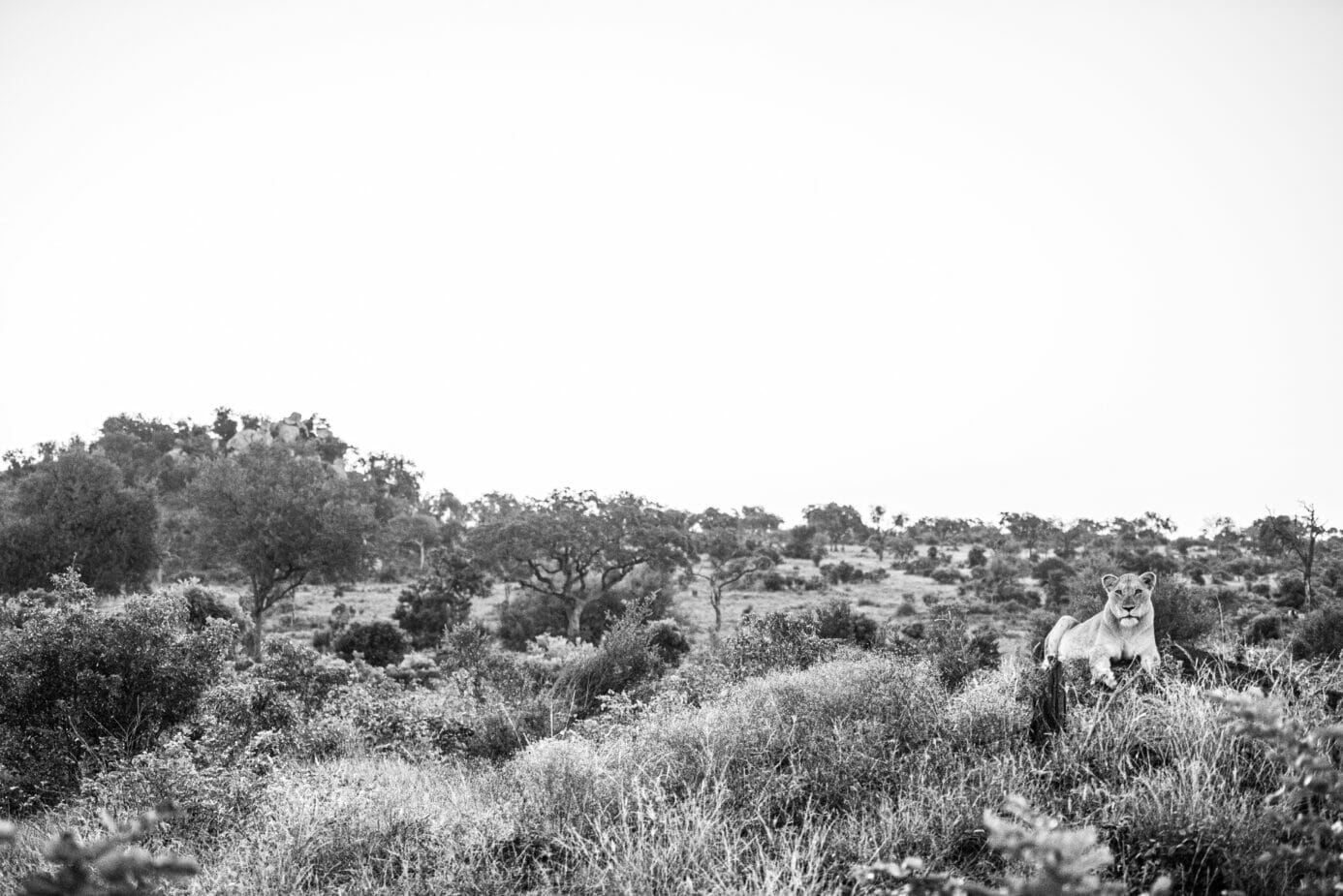
Situated in the north-east of South Africa, this reserve spans 7,523 square miles (6 million acres), equating to the same size and shape as Israel. Unspoiled and untamed, Kruger National Park offers visitors an experience of a life-time with encounters with the Big 5, leopard, lion, buffalo, elephant rhino and much more in an unfenced environment.
Flanked with history and mountains, Kruger is one of the most famous destinations for safari adventures. With accommodation in the park itself and private lodges in the Greater Kruger, such as the Sabi Sand Reserve and Timbavati, there is something for everyone.
There is also the option to fly into Kruger Mpumalanga Airport, Hoedspruit or Skukuza Airport, and road transfer to your accommodation. These flights would take about an hour from Johannesburg.
For many, Kruger National Park is explored through a self-drive. This feasible way of travel is 6 hours from Johannesburg and allows for more flexibility. The roads to Kruger are mostly tarred dual carriage-ways with service stations along the way.
The height of summer is considered to be in November/December, where weather is humid and hot with the chance of afternoon showers. This is the time when many animals are born and so one could expect to see young impala, warthog, birds and many more which are vulnerable to predators.
The months of January through to March are hot and usually drier than the months prior. This warmer weather is avoided by going on early morning and late evening drives. This is a fantastic time to view migratory birds.
April marks the month whereby the vegetation begins to change from lush green to browns and yellows of autumn. The vegetation also begins to thin out making it an easier time to spot wildlife.
Winter occurs during the months of May and June, with temperatures dropping and visibility increasing as vegetation becomes even sparser.
The months leading up to spring in September are considered very dry and cold during the night. Wildlife viewing and photography is wonderful during this time with many animals found around waterholes.
September and October mark the beginning of spring and the height of the dry season. Hot dry winds occur, with high amounts of wildlife spending time at waterholes and rivers. The first rains may be seen towards the end of October as fresh shoots begin to show themselves.
For a more in depth view of the difference in the months in the Sabi Sand Reserve click here.
- Famous for its leopards
- Home of the Big 5
- Close to scenic towns such as Graskop, White River and Pilgrims Rest
- Boasting many ultra-luxurious private game reserves
- Sabi Sand Game Reserves
- Timbavati Game Reserves
- Manyeleti Game Reserves
- Thornybush Game Reserves