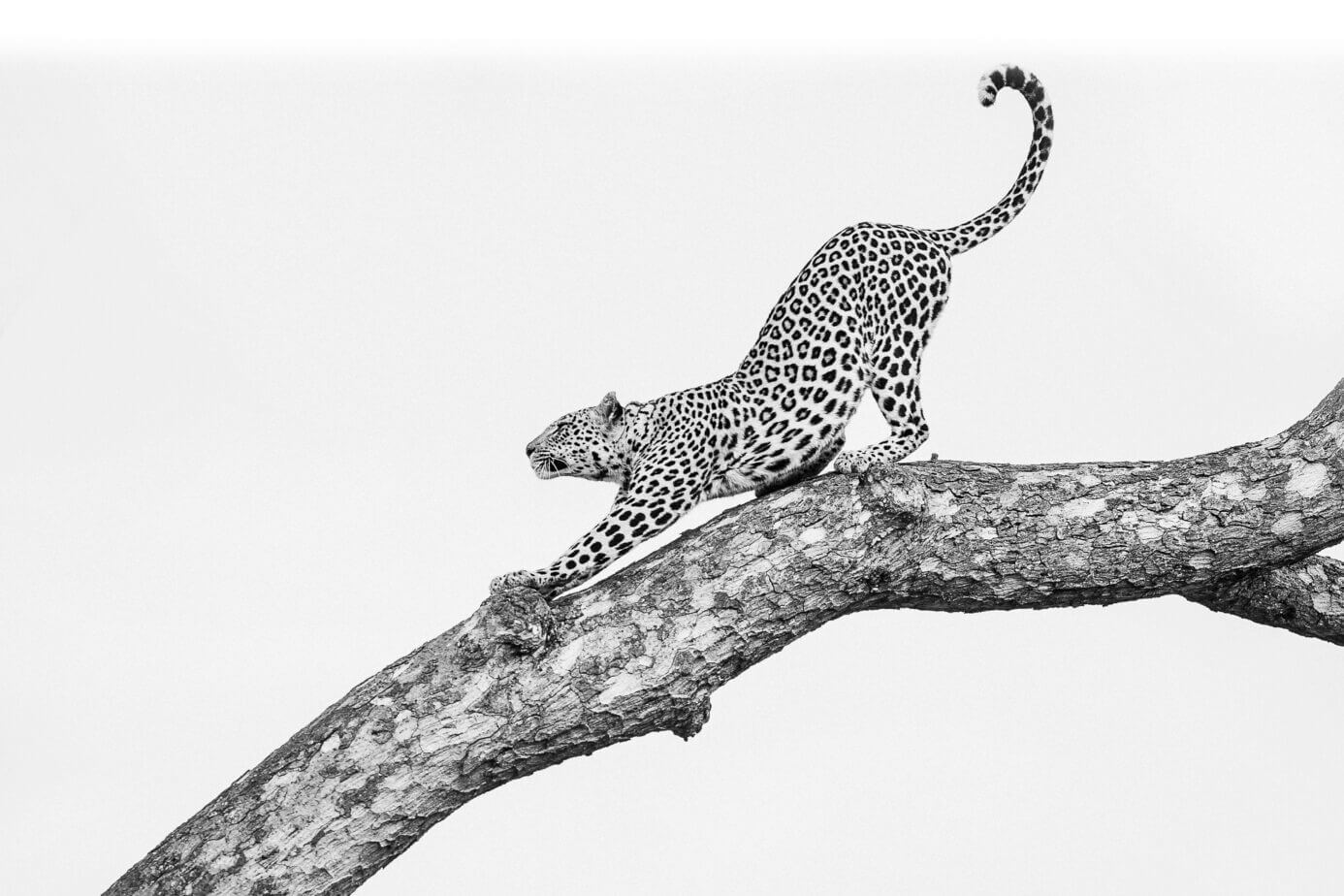
The vehicle idles at a bend in a two-track road while your tracker, seated on the bonnet a few feet above the ground, lifts a hand for quiet.
What does it take to notice something before it has announced itself?
Not urgency. The opposite of urgency, in fact. It takes stillness, long enough for the eye to stop skimming and start reading: a bent blade of grass, a print half-erased by wind, a bird gone suddenly and deliberately quiet.
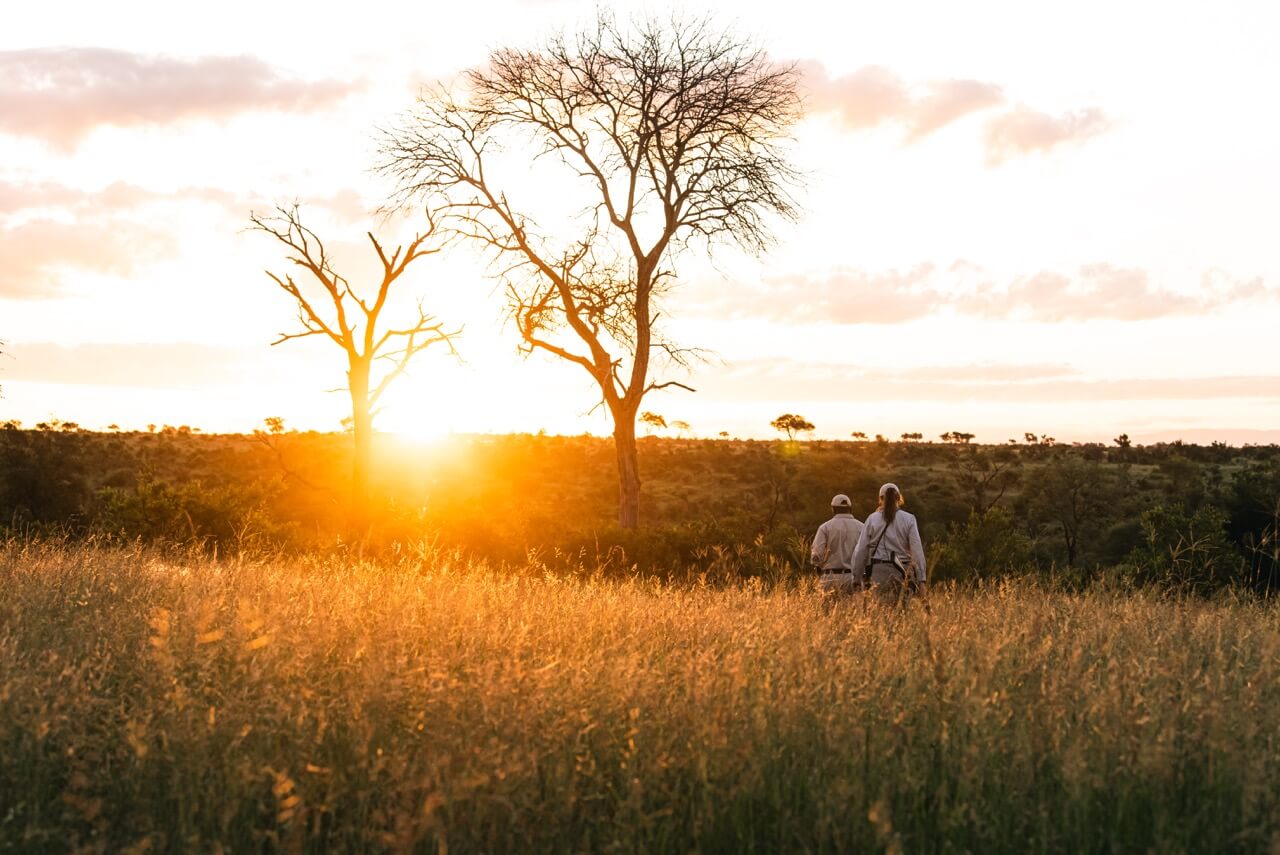
A track is never proof of anything on its own. It is a single fact, laid down an hour ago or last night, and a good tracker will not say what it means until the next track agrees with it, and the one after that. This is not guessing. It is a different relationship with not knowing altogether: patience, willing to be wrong, comfortable staying with a question instead of reaching for an answer. Trackers here have spent decades building that relationship.
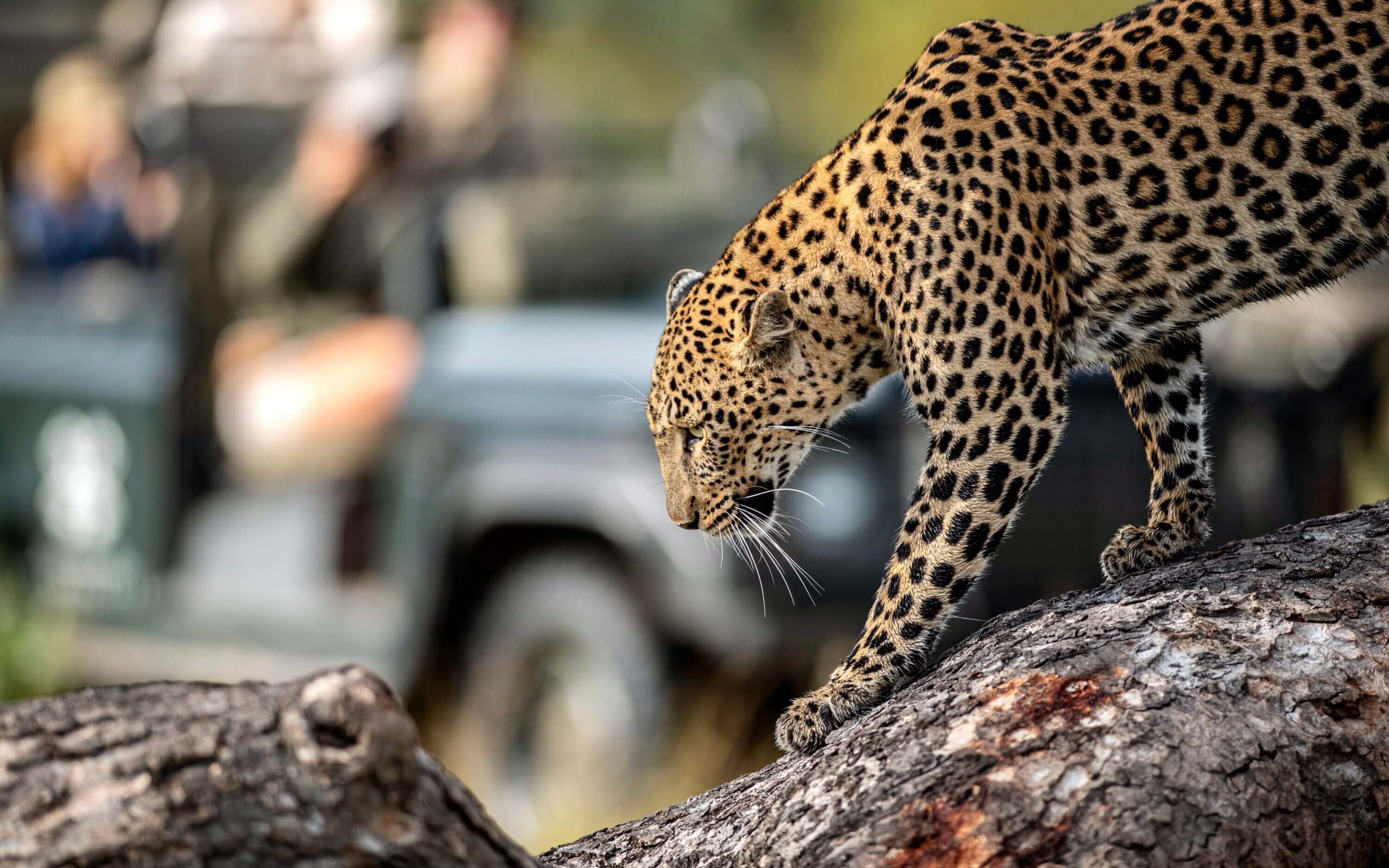
Then your tracker’s hand shifts. Not at the ground this time, but into a thicket you would have driven straight past. It takes a moment to find her: a shape a shade darker than the shadow around it, already watching you back. A leopard, still as the morning, exactly where the last few tracks said she would be.
This is what all that unhurried attention was for.
The Story In The Sand
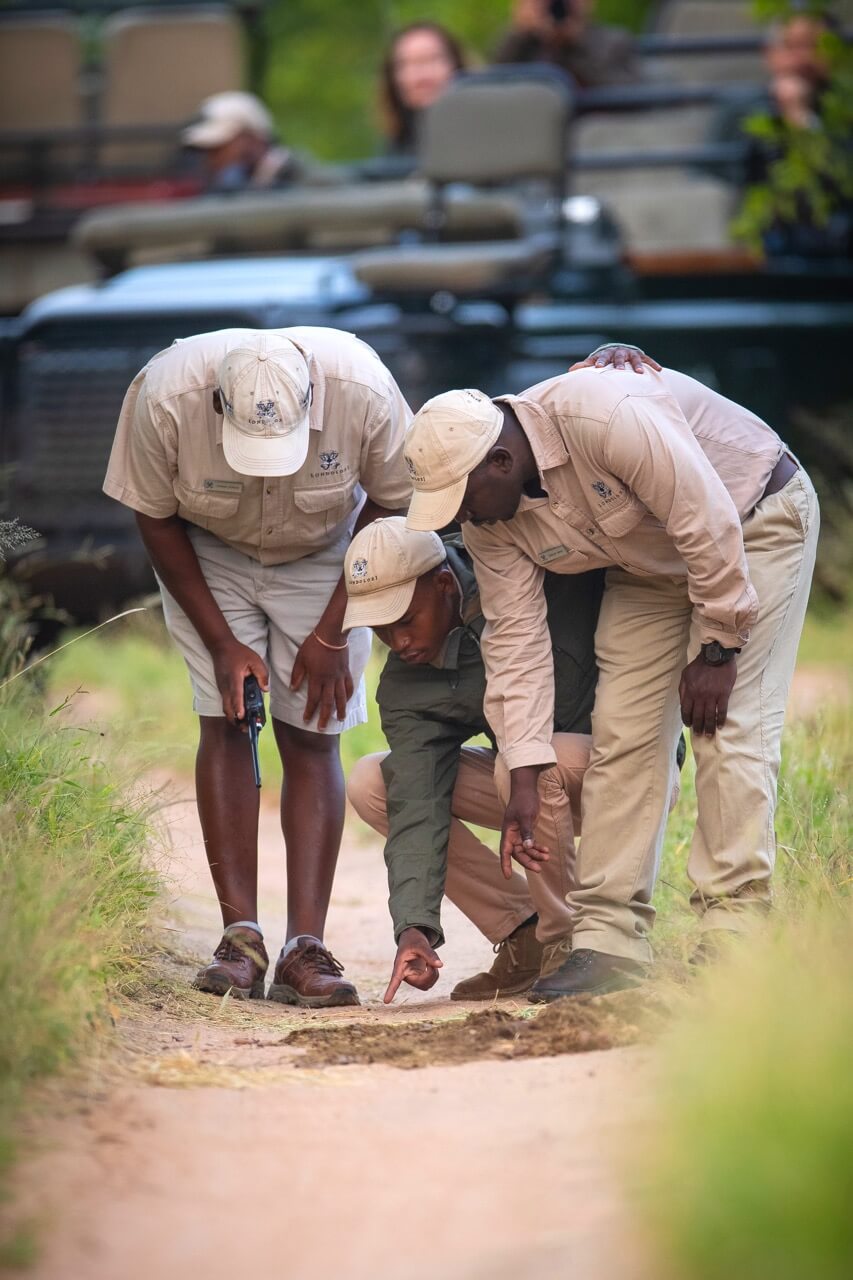
A track is not the animal. It is a question the animal left behind on its way past, and the only way to answer it is to find the next one, and the next, until a shape starts to emerge that no single print could have told you on its own.
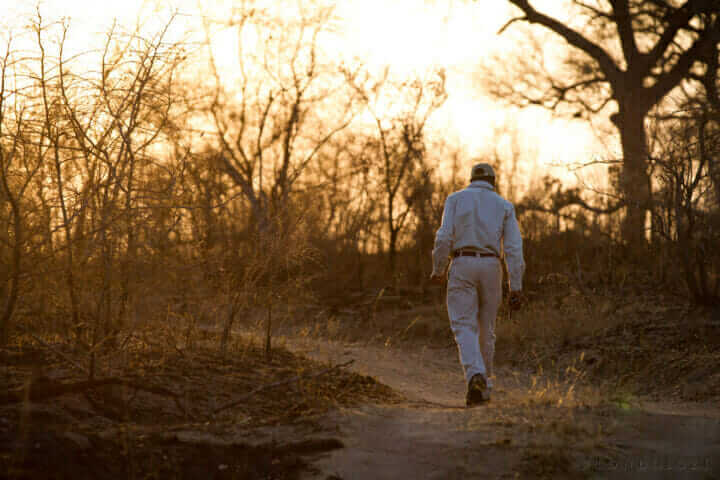
Trackers speak of “ageing” a spoor: how the edges have begun to crumble, how much dew has settled inside it, whether the wind has already softened its outline. None of this is written down anywhere. It is passed on print by print, over years, from someone who already knows how to someone who is still learning, and it cannot be rushed and it cannot be faked.
It is the same unhurried, accumulating attention Londolozi asks of a guest: not to solve anything, not to arrive anywhere in particular, but to keep noticing, and let the story build itself.
A Hundred Years Of Reading This Ground
Charles Boyd Varty and Frank Unger bought this corner of the Sabi Sand in 1926, sight unseen. In 1976, on ground that cattle and hunting had already worn thin, the Vartys tried something nobody else nearby was doing: they let it rest, and rebuilt it as wilderness on purpose. It worked well enough that &Beyond and Singita were both built on the same model, and Nelson Mandela came to see it for himself and called it a pattern for the country’s future.
Fifty years of habituating leopards to vehicles. Trackers trained by the trackers who trained them. The Vartys were reading this land, patiently and without proof it would work, long before there was a model to name what they were doing. None of it can be shortcut. All of it can still be read, on a single morning drive, by someone who knows how to look.
You are not being shown a lodge. You are being let in on a hundred-year bet that is still unfolding.
I do an incredible amount of research when planning a trip… after reading up on the history of Londolozi and the Varty family; their commitment to conservation, to education, to giving back to the community, to activism and their connection to Nelson Mandela was a big part of why we chose Londolozi… Our butler made every mealtime special… The most magical part for us were the game drives, and that was entirely due to our amazing guide and tracker team… I sobbed the day we left and I have never left a place with such a yearning to return. ~ TripAdvisor Review: Deborah C 2026
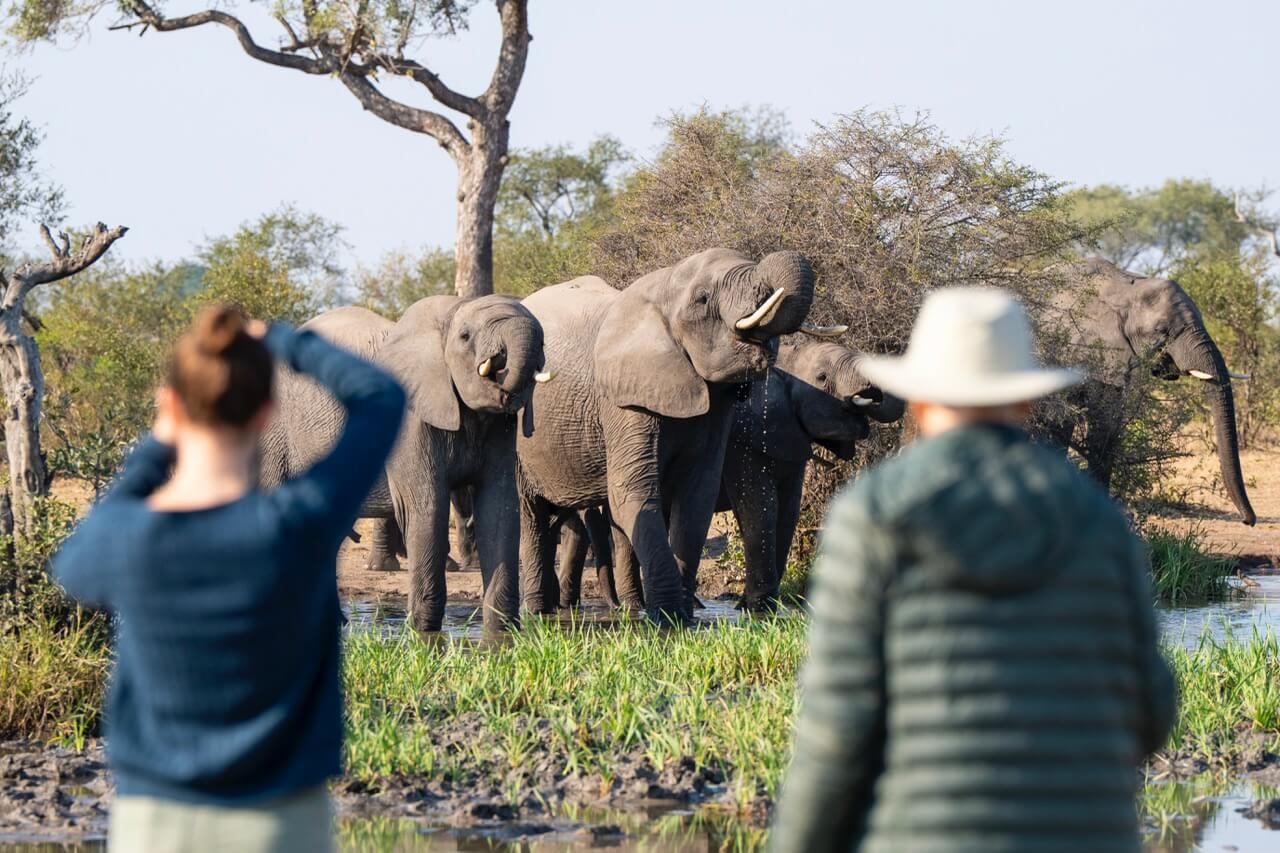
One Ranger. One Tracker. Yours For The Stay.
You have the entire reserve to explore. Your ranger and tracker, yours for the whole of your stay, have tens of thousands of acres of traversing rights to work with, across the Sabi Sand and into the unfenced greater Kruger, with no fixed route and no set time to be back. If a herd of elephants is worth sitting with for another hour, you sit with them for another hour. If you would rather have the vehicle entirely to yourselves, a private vehicle can be arranged. The only itinerary here is the one the bush is offering that particular morning.
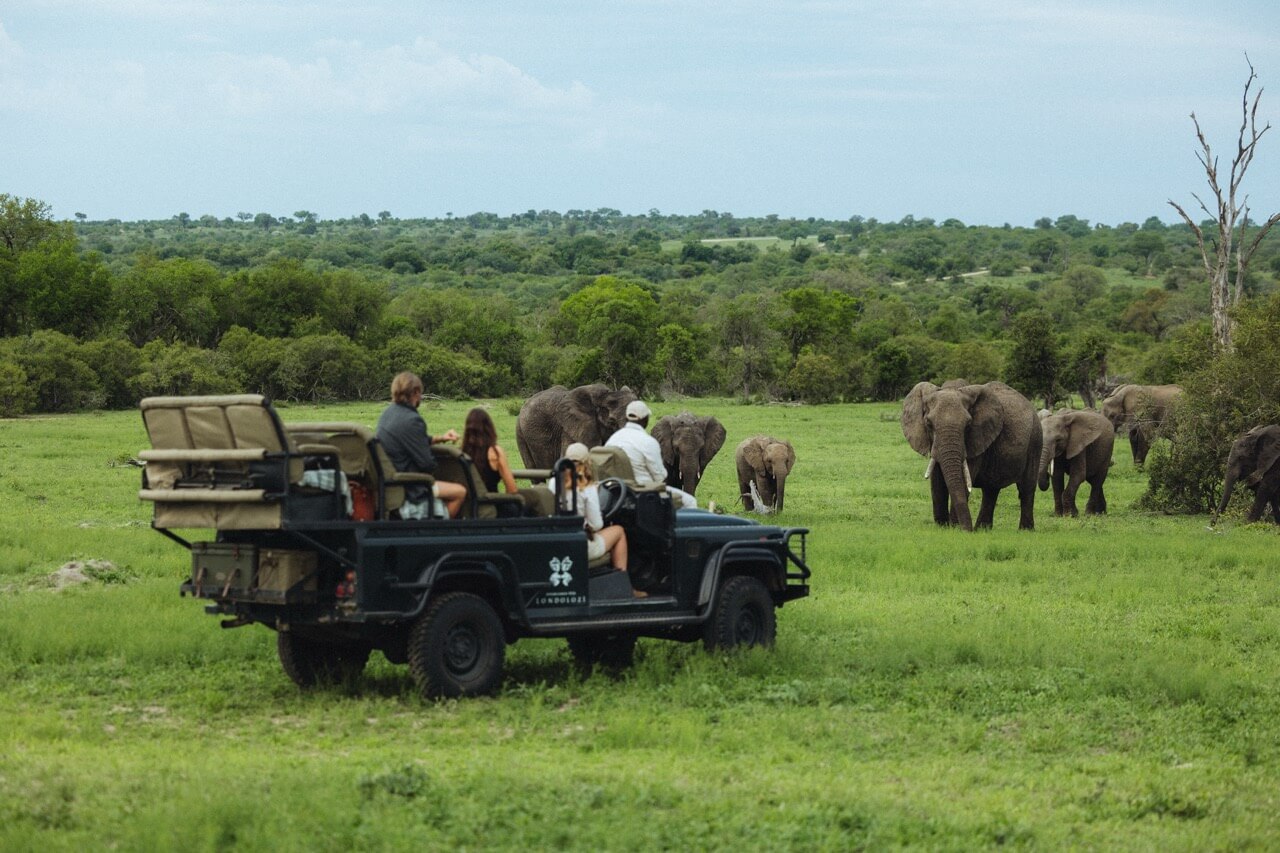
The Rhythm Of A Day
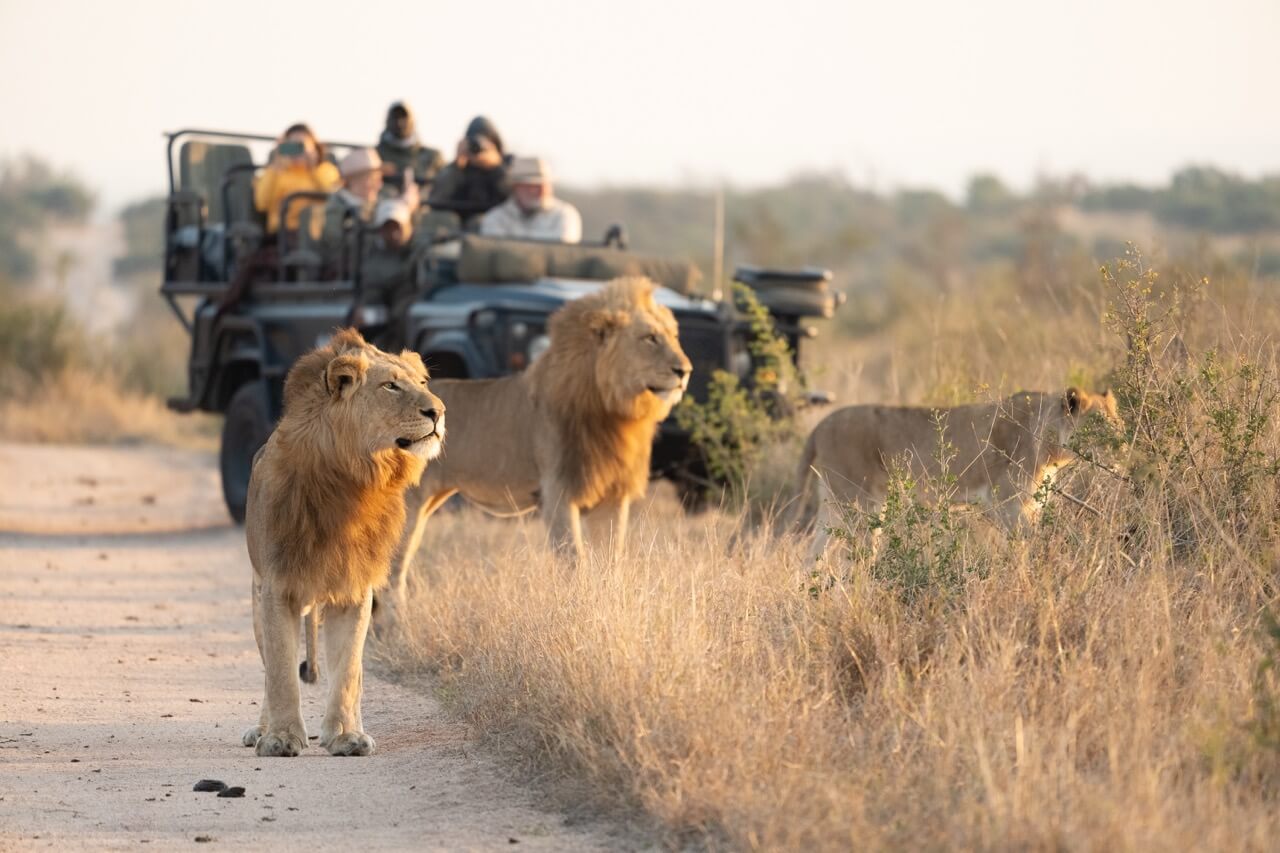
Coffee before the sun is up, standing around a fire that was lit while you were still asleep, the reserve exhaling the night’s cold. Into the open vehicle while it’s still nearly dark, your tracker up front on the bonnet seat, eyes barely a metre off the ground. A couple hours in the bush as the light changes before breakfast: a lion pride still lying where they killed, an elephant herd crossing unhurried in front of you, a fish eagle calling somewhere over the Sand River. Back for a late morning that belongs entirely to you: a nap, a book, the fibre connection in your suite if something genuinely cannot wait.


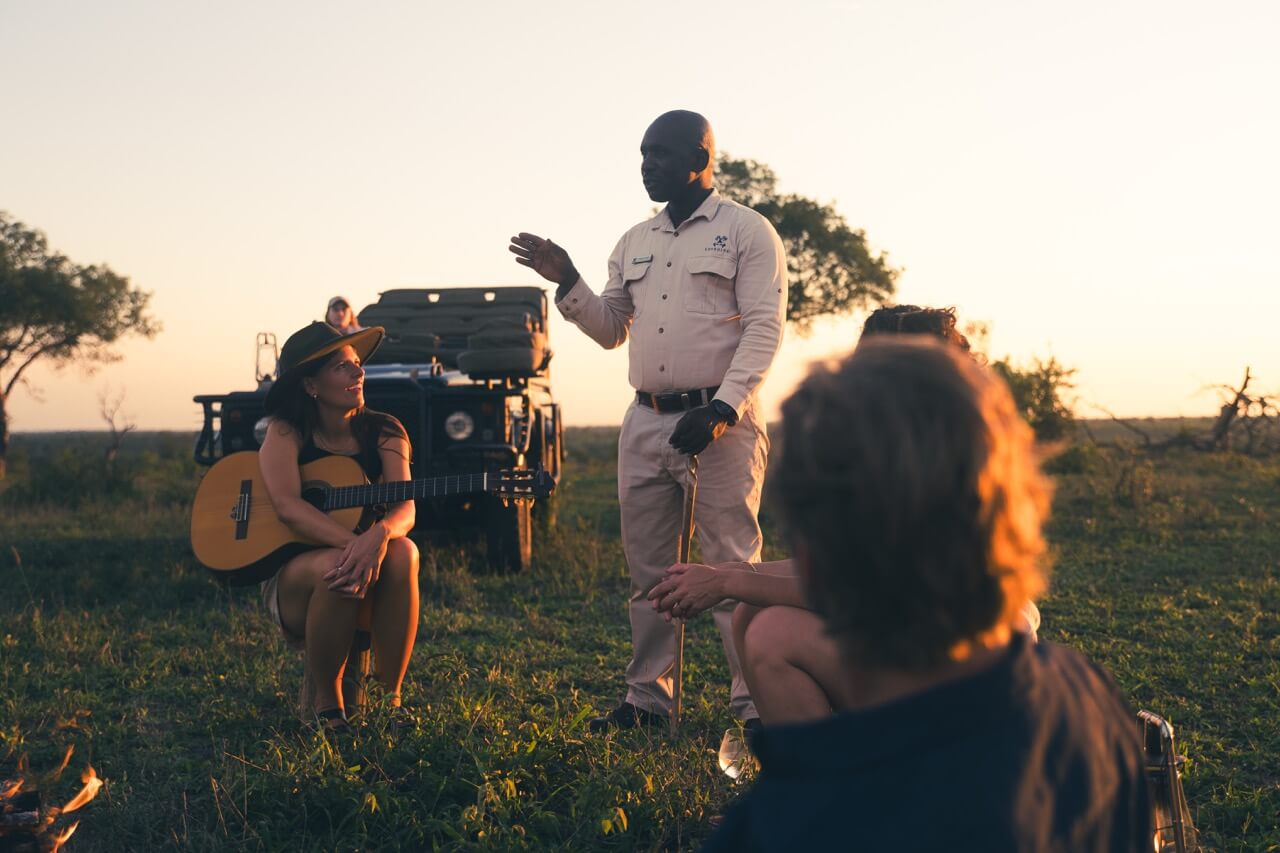
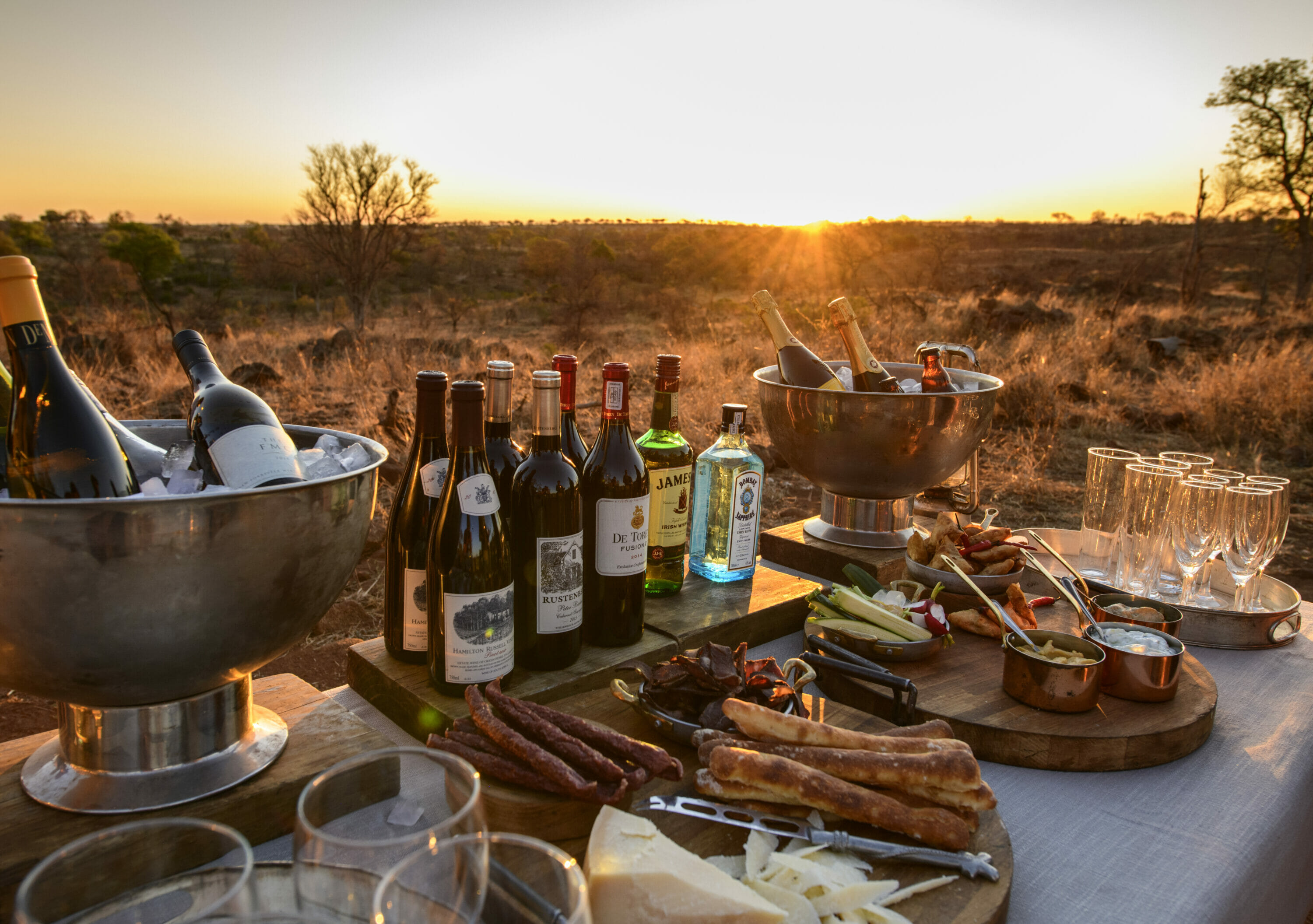
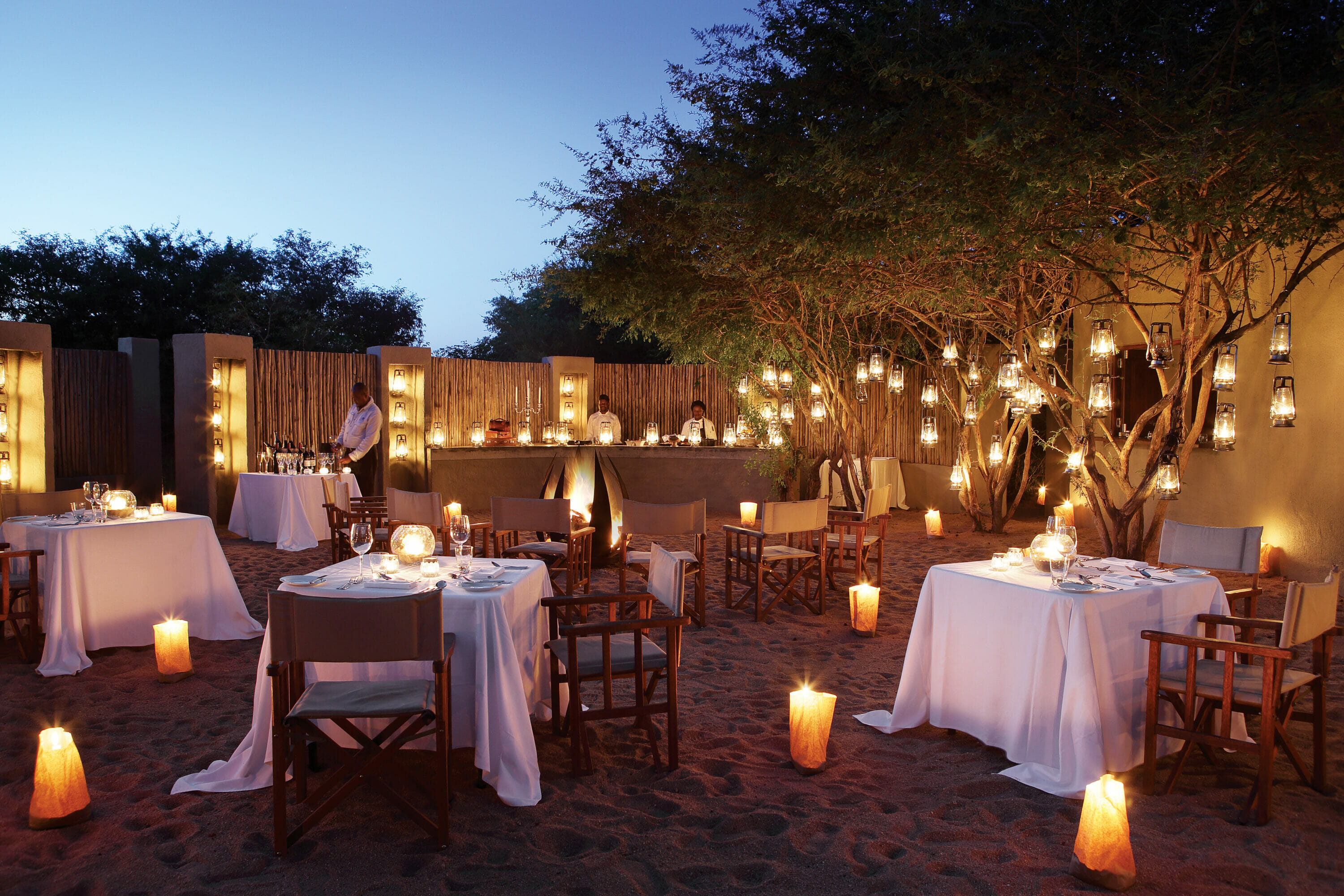
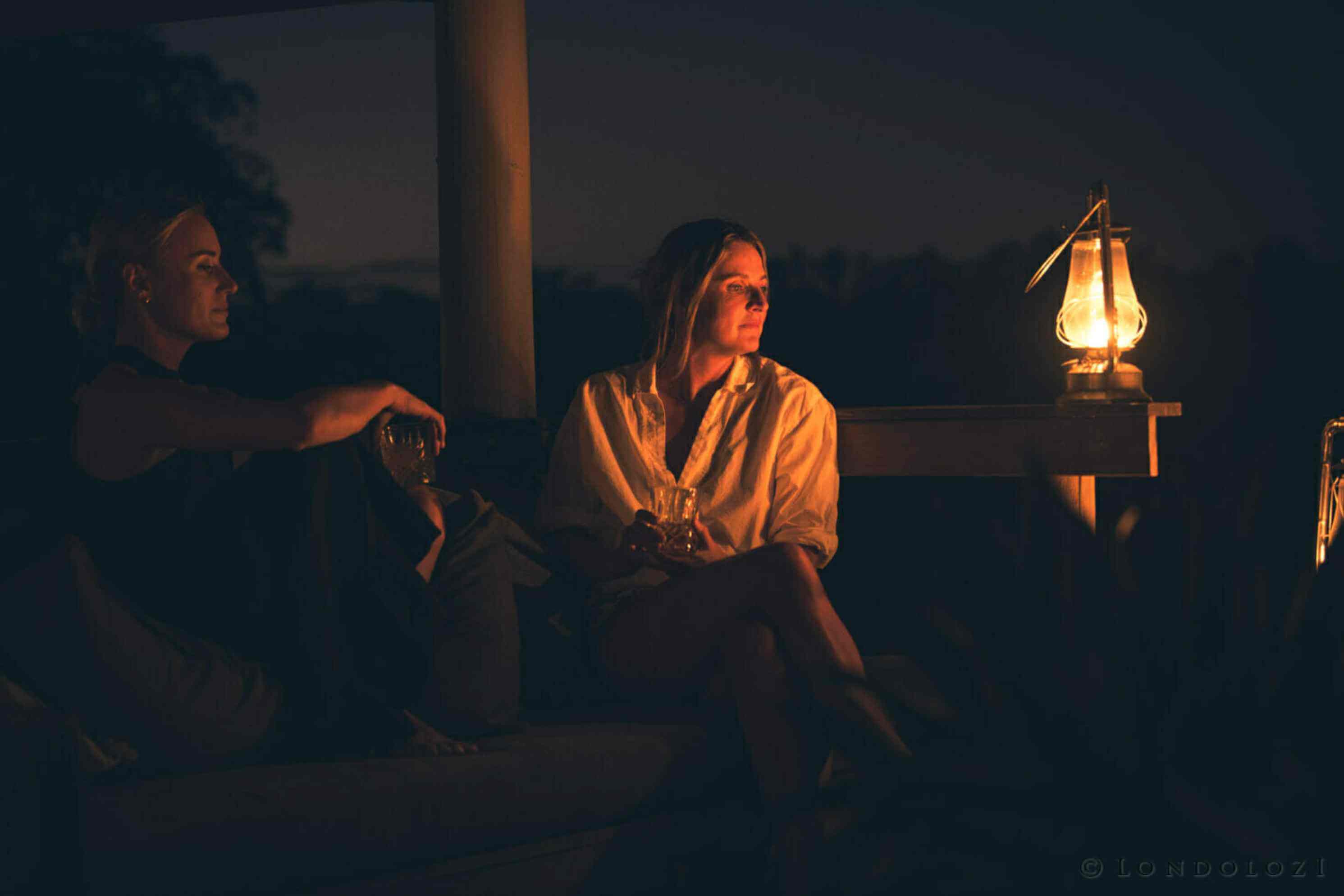
Out again in the afternoon as the light turns long and gold, and somewhere along the way the vehicle stops, a drink in your hand, for a sunset that has not needed improving in a hundred years. Dinner outdoors under more stars than most people have seen since childhood. A fire that will still be burning, in roughly the same spot it always has, long after everyone has gone to bed.
Somewhere out there while you sleep, a lion calls and a hyena answers it, and in the morning your tracker will be able to tell you almost exactly where they were standing when they did.
The Ripple Fund
Every stay puts 1% of revenue directly into land, wildlife, and the surrounding communities: Ripple Fund grants, the Good Work Foundation’s schools, the restoration of the Sand River itself. None of it is a footnote you’re asked to feel good about. It is simply where a percentage of what you spend here goes, every time, whether you read this paragraph or not.
It’s hard to overstate Londolozi’s reputation and place in safari history… We were extremely privileged to have a guide and tracker dynamic duo… We wondered if we were being fed some skilled marketing, but then confirmed that everything lived up to the hype. ~ TripAdvisor Review: Worldbutterfly, Dec 2025

The Track Doesn’t Wait
Every animal here leaves behind a record of exactly where it has been and where it is likely going next, if you know how to read it. Read enough of them, closely enough, for long enough, and you start to notice what a track actually asks of the person following it: not speed, not certainty, just the willingness to keep looking after the first answer turns out to be wrong.
That’s the whole of it, really. Not a metaphor. Just the chance to slow down, notice something for the first time, and discover it is over a hundred years old.
FAQ
Yes there is fibre in your suite. While we encourage you to switch off and immerse yourself fully into the Londolozi experience, the suites do have work spaces which can be used to take calls and work remotely from if need be. We discourage phones on game drives and you’ll find there’s limited reception out in the bush.
If you book a private vehicle you won’t share your game drives with other guests. Your ranger and tracker are assigned to you for the length of your stay.
We believe it takes 4 – 6 days to properly settle in. The first day or so you are still unwinding – long travel and a new environment. By the second morning, most guests have found the rhythm: early coffee, two drives a day, and enough time for your ranger and tracker to start reading what you’re actually looking for, not just what’s on a checklist. The days after that are what let you slow down properly – noticing the smaller things alongside the big sightings, and getting to know the people around you, not just the wildlife in front of you. However we realise that this may be too long for some travellers, in which case we do offer shorter stays.
Two game drives a day, timed to when the animals move: dawn, when the bush wakes up around you, and late afternoon, when the light turns gold. In between there’s breakfast and the rest of the day is yours, whether that’s a bush walk, the Healing House, or just your suite.
Yes. Wheelchair-accessible suites and vehicle access are available – let your consultant know when booking so everything is arranged ahead of your stay.
No, neither is required. Game drives are seated in an open vehicle, and the walk between your suite and the main deck is short. Many of our guests are on their first safari.
Londolozi has its own airstrip, so from Johannesburg it’s a short, direct one-hour flight straight into the reserve. Many International Airports have direct flights straight into Johannesburg (OR Tambo), so getting to Londolozi could simply be two flights.